
How we launched a co-headline album from Hayes Carll and The Band of Heathens: an artist-owned Shopify site, video ads, Spotify campaigns, and a limited vinyl that sold out by release day.
In this post:
- Why we built the album its own Shopify site instead of a link page
- The site details that made it feel like a real release: Seated tour dates, an announcement bar and a "Before/After Listening" slider
- The video and ad plan, phase by phase
- What sold, including a holiday bundle that nearly sold out its run of 100
Plan your album launch with us
Why give one album its own site?
Hayes Carll and The Band of Heathens each have their own fans. A record with both names on it needed one place that belonged to neither, where a Hayes fan and a Heathens fan land on the same page and buy the same record.
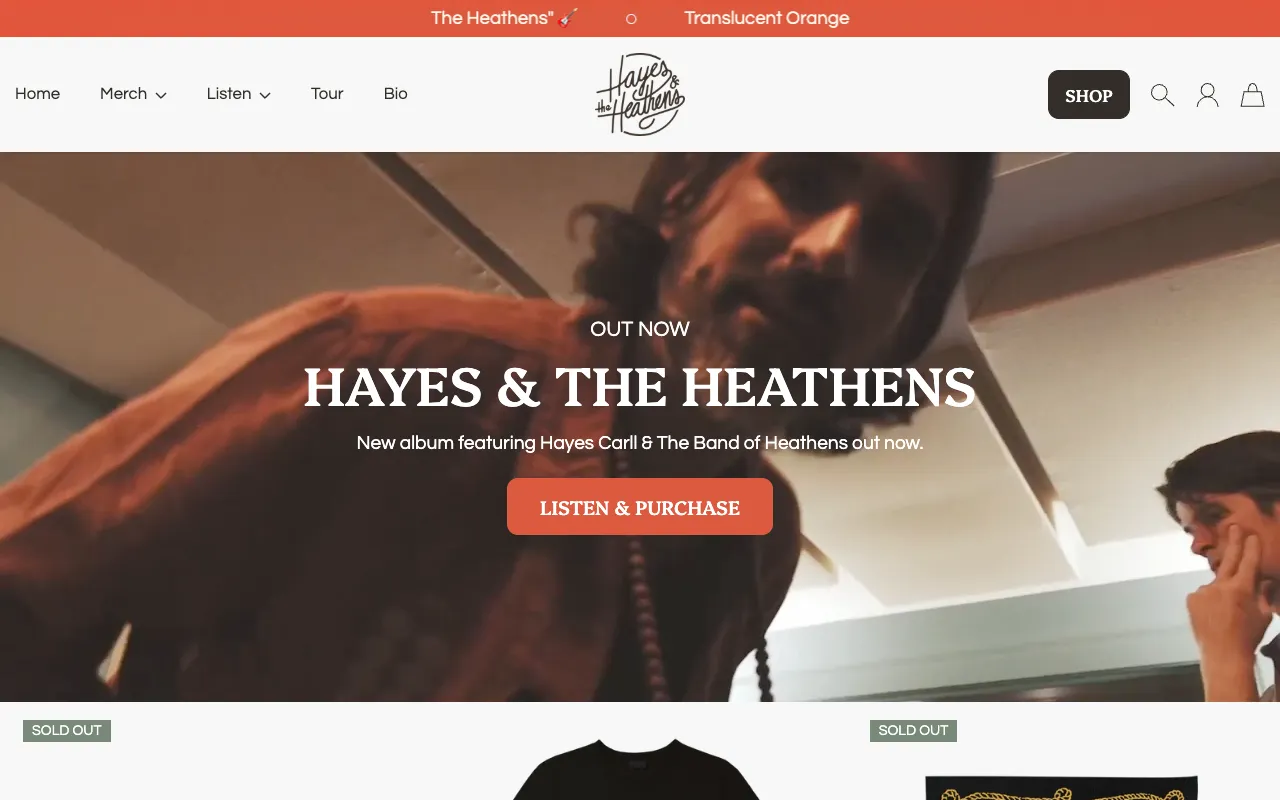
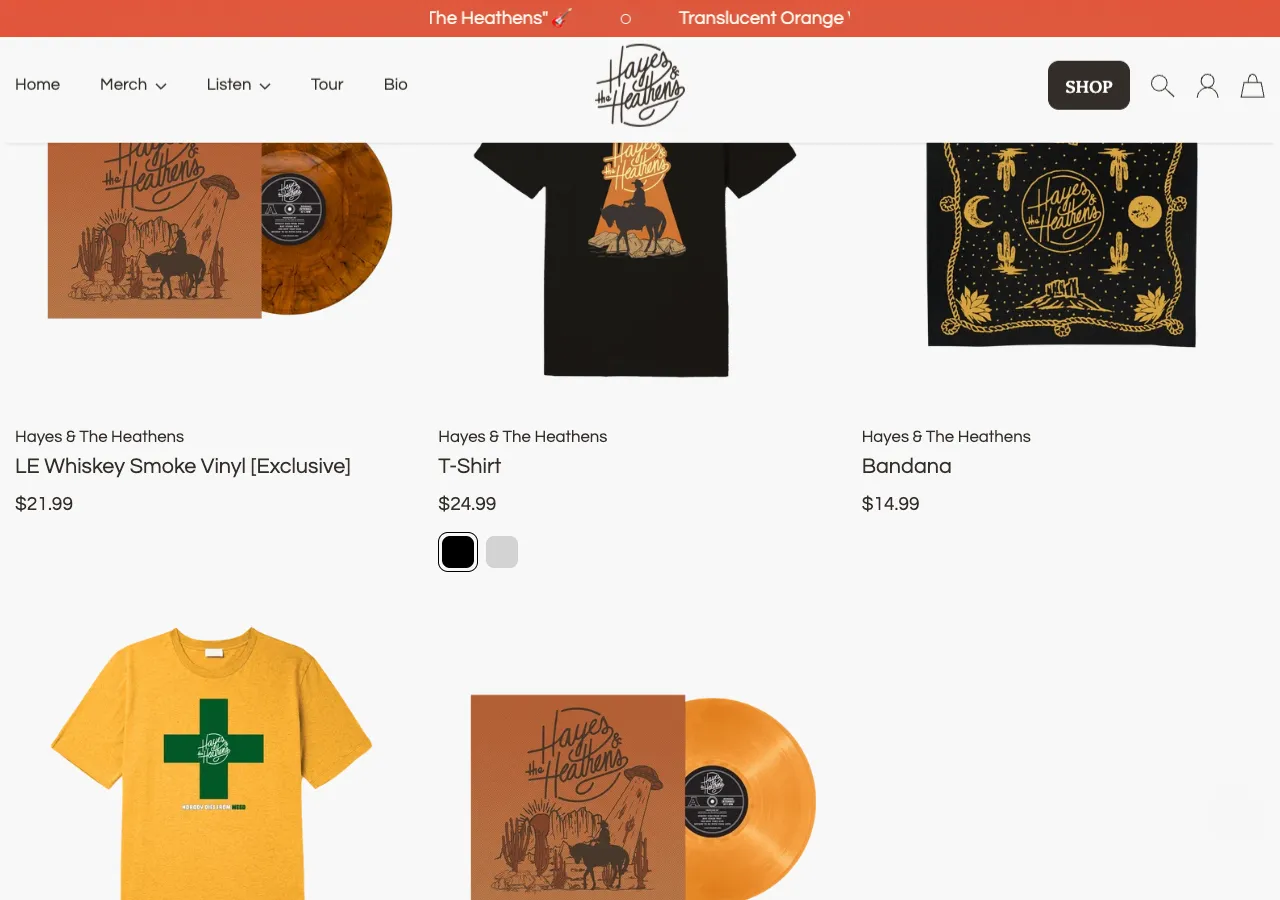
So the album got hayesandheathens.com, built on Shopify. It carries the band photo, a short bio, the music videos, the tour dates and the merch. The store feeds Google Merchant Center, the Facebook and Instagram shop, YouTube and Spotify, so the vinyl shows up wherever fans already are. We had it live about two weeks after the art arrived. The manager's reply to the first look: "Everyone is loving the website!"
What makes a merch site look like a real release?
Most bands at this level run a link page or a default store template. A paid Shopify theme changed that for about $100. The one we used, Flawless, gave us a video hero, clean product grids and sections a free theme doesn't have.
- An announcement bar. It scrolls the news at the top of every page. When the second pressing landed it read "Translucent Orange Vinyl!" without anyone touching the homepage.
- A short menu. Home, Merch, Listen, Tour, Bio and a Shop button. Nothing a fan has to figure out.
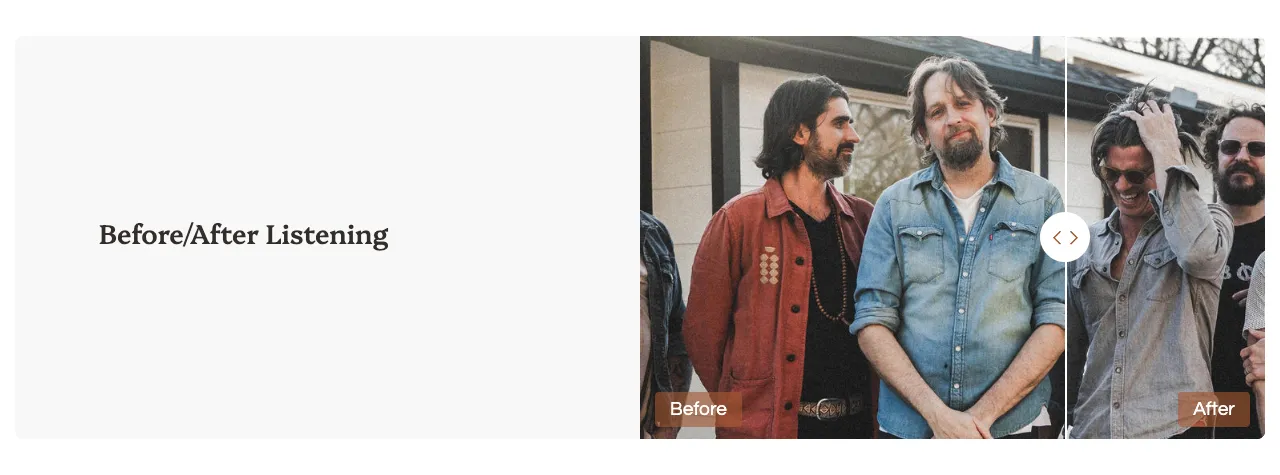
- A "Before/After Listening" slider on the product pages. Drag it and the band goes from posed to laughing. It's a joke, and it's the thing people remember.
- Tour dates from Seated. I couldn't embed the combined Hayes & The Heathens dates with Bandsintown, so I set them up on Seated. Its widget takes custom CSS, so the dates match the site instead of looking pasted in, and the VIP ticket links sit right next to each show.
Every new subscriber from the store's pop-up went into the band's email list, tagged Hayes & The Heathens. By mid-September that pop-up and the customer list had added 376 subscribers.
- Give a joint record its own home, so neither act's fans feel like guests.
- Spend the $100 on a theme. It's the cheapest upgrade in the whole launch.
- Pick a tour widget you can style.
Where did the videos come from?
There wasn't a video plan for the first single, so I cut one. The band had studio clips that weren't used: boot stomping, big smiles, slide guitar. I edited them to the album's brown and tan look, and it became the official video for "Any Other Way."
The band also had studio footage of the whole group singing "Nobody Dies From Weed." Putting the record's audio under it gave us another video, another post and another ad from footage that was already on a hard drive.
How did we run the ads?
We started small and let the numbers set the budget. By September 17 the first $500 on Facebook and Instagram had returned 10 times its cost, and that's what I took to the manager when we planned the rest.
- Pre-order. Facebook and Instagram ads to the vinyl, with Google display ads in the tour cities sending people to the homepage.
- Single. Separate Spotify Marquee campaigns for "Any Other Way" on Hayes Carll's account and on The Band of Heathens' account, so each act's listeners met the other.
- Release. A Spotify Showcase for the full album, and Meta ads shifted to streams and vinyl for a wider Americana audience.
When you set up Spotify Marquee or Showcase, pick the goal first, then the audience. Marquee needs at least 5,000 monthly listeners in the market you target, and each campaign starts at $100. Choose accelerated delivery if you want the spend on release week.
One finding worth stealing: Meta ads that sent people straight to the album on Spotify cost about a third of what a Marquee click cost.
What did it do?
The whiskey smoke vinyl sold out around release day, and I switched off conversion ads that were still making money because there was nothing left to sell. In the month around release The Band of Heathens added 50,000 monthly Spotify listeners and passed 855,000. The album passed 500,000 streams and landed on Spotify's All New Country playlist.
Email did more than any ad. During the pre-order it brought 12% of the store's visits and 24% of its sales.
My contrarian take: the sellout wasn't the win. It was the ceiling. Most buyers bought one record and nothing else, so we ran out of things to sell while the ads were still working.
What happened after the sellout?
The band pressed a second color, translucent orange, and we built a holiday bundle around it: the new vinyl, a 3-inch wood ornament with the band's insignia, and a 12-by-12 holiday print signed by everyone. One hundred bundles. The plan was to price it at $40. I pushed for $49.99, because the signature and the season made it a collector's item, and fans who missed the first pressing were waiting. I named it the Rockin' Holiday Bundle.
It sold 92 of the 100. It went live with seven signed test pressings, announced by email and social at the same hour.
What would I do differently?
- Bundle from day one. We launched with everything sold on its own. A bundle raises what each fan spends, so the same stock pays for more ads.
- Plan the second pressing before the first sells out. The holiday bundle proved the demand was still there.
- Get the artists' friends on record early. I asked for one-line quotes from musician friends with their own audiences, so we could run ads to their fans. Start that before the announce.
Questions musicians ask
Should a side project or co-headline album get its own website?
Yes, if it has its own record and merch. One address that belongs to both acts gives both fan bases a place to land, and you can still send each act's own site to it with a pop-up.
Is Seated better than Bandsintown for tour dates?
For this launch it was. Bandsintown wouldn't embed the combined act's dates, and Seated's widget takes custom CSS and holds VIP links next to each show.
Is a paid Shopify theme worth it for a band?
Ours cost about $100 and gave us the video hero, the announcement bar and the slider. It's a one-time cost on a site that sells for the whole album cycle.
The short version
- Give the album its own Shopify home and connect it to every place fans shop and listen.
- Small details carry a release: a styled tour widget, an announcement bar, one joke worth sharing.
- Build the list, start the ads small, and plan bundles and the second pressing before you need them.
The record sold out because the pieces were connected. Next time the bundle and the second pressing will be ready before the first box ships. See more of our band website design work, how the last chance to pre-order email fits in, and why bundles raise every order.